ALSO: History in LA; Silence Beats Monuments; Synthetic Democracy
Welcome to the monthly newsletter of Democracy Local, a planetary publication of stories, ideas, data, scholarship, and events about everyday people governing themselves.
More about us here. Donations to Democracy International and its democracy community, which hosts our publication, can be made here. Please feel free to sign up here or subscribe to our Substack. Learn more about International Democracy Community events here. (All photos by Joe Mathews)
ARE CITIES THE ONLY MULTILATERALISTS LEFT?
As the world divides into spheres of influence, governed by major powers acting unilaterally, there’s very little talk of multilateralism anymore.
Except when cities and local governments get together.
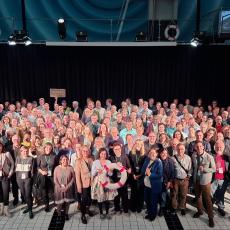
Which is why “local multilateralism” was the main theme of February’s annual Barcelona retreat of United Cities and Local Governments, the world’s largest municipal organization.
UCLG officially announced “100 Days of Local Multilateralism,” running from April 21 through July 31, to inspire deeper plans for more collaboration between local governments, and between local governments and international institutions. “Local multilateralism” will thus be a focus of a series of local-oriented conferences around the planet, including the High-Level Political Forum (HLPF) in New York, the World Urban Forum (WUF) in Baku, and the UCLG World Congress and World Summit of Local and Regional Leaders in Tangier.
Emilia Saiz, UCLG’s secretary general, framed this as a void-filling opportunity. The multilateral system has long excluded local voices. Now that that system is breaking down—under pressure from China, Russia and an explicitly authoritarian U.S. government, it’s time for cities and local governments to make multilateralism their own.
“We didn’t like the multilateral system so much as it stood earlier,” Saiz told the Barcelona retreat, “so these difficult times of the multilateral system might also be a good opoprutnity for us as multilateralists … to actually renew the system, to actually ensure that different actors are taken into account in the discussions.”
Related reading: Check out Free University Brussels professor Eric Corijn’s essay on “Rethinking Europe as networks of cities and metropolitan regions,” published by the Global Parliament of Mayors.
A GLOBAL MUNICIPAL DEVELOPMENT BANK?
Also at the UCLG retreat in Barcelona, Indian Institute for Human Settlements Aromar Revi offered an extraordinary proposal to launch a Global Municipal Development Bank next year.
The idea to supercharge the financial capacity of local governments to build and create more, both for themselves and with each other, in an era when nation-states are often attacking their own local governments.
Other speakers responded with skeptical notes, about not thinking of cities as corporations (even though, as a legal matter, many are “municipal corporations”) and about whether communities trust their governments enough to embrace much more aggressive local finance.
But the proposal was unusually specific and detailed which gave it real power. It also was reminiscent of the combination of local banks and Local Government Financing Vehicles (LGFVs) that Chinese cities have used to become major forces in local and global investment.
As the Metropolitan Times summarized it:
Revi described a three-layer structure aimed at credit strength and scale. In his outline, cities would be the “owners,” with paid-in and callable capital; a select group of countries would act as “anchors” by providing sovereign guarantees; and additional “fuel” would enable bond issuance and project pipelines. The pitch emphasized speed—breaking “clearance bottlenecks” with a six-to-nine-month approval cycle—and a governance model meant to preserve local decision-making: a board with regional city directors holding voting rights, while countries would intervene only on systemic risk, not on project choices.
But Revi’s most political argument was about sovereignty—specifically, the financial sovereignty of cities. He framed it through a set of rights: the ability to borrow on municipal merits, revenue ownership, digital sovereignty, and a pledge of “legal non-derogation”—the claim that a city’s resources should not be arbitrarily appropriated. His bottom line: cities can become “bankable,” moving “up the elevator,” and could even see dividends within five years, creating incentives for participation.
The proposed timeline was concrete: adopt a charter, set up city audits, and “launch the first bond in 2027.” Revi also extended an invitation to a signing ceremony at the UCLG World Congress in Tangier in June 2026, placing the idea squarely within UCLG’s political calendar.
DEMOCRACY HISTORY IN LA?
Deliberative democracy processes, like citizens assemblies, are commonplace in Europe and Japan, and are growing more popular in Latin America and Africa. But they are very rare in the U.S.
So the Los Angeles Charter Assembly, which kicked off February 28, is making history in multiple ways. The assembly of 40 Angelenos is the first citizens assembly ever held in Southern California and only the second in California (Petaluma, north of the Golden Gate Bridge, held an assembly in 2022). And it’s the first such assembly ever used to write a city constitution, which is the called the charter in LA.
The assembly also came together quickly. It was approved by a city charter reform commission only on Oct. 29, and it receives no government money. Organizers, who include Democracy Local’s Joe Mathews, raised $265,000. The first phase of the assembly runs for four full days, over two consecutive weekends, ending March 8. The assembly delegates are scheduled to report their recommendations to the charter commission the following week. Then that commission forwards recommendations to the city council, which can decide whether to ask voters to approve them on the November 2026 ballot.
This could be just the beginning for the assembly, especially if Los Angeles—beset by fires, corruption and federal immigration raids—decides to extend the process of reforming its government structures into future years.
OUR TOP STORY THIS MONTH
Our column, co-published with Zócalo Public Square, looked at how, with nations limiting human rights, local people and communities are establishing their rights in local charters and constitutions. The column was translated into 10 languages and picked up around the world, including in China and Russia.
THE PEOPLE HAVE TAKEN OVER GOVERNING CLIMATE
After another failed COP summit, most recently in Belem, Brazil, there’s renewed interest in the “Global People’s Track on Climate,” as a new report documents.
This is very much a local story of planetary governance. The “Global People’s Track” includes “more than 11,000 participatory budgeting processes, 700 citizens’ assemblies, and dozens of digital platforms” that enable community decisionmaking.
Among the highlights are a water management strategy developed by everyday people in Uruguay, and local adaptations in Kenya cities and towns. Indigenous groups are leaders in this—only 5 percent of the world population is considered indigenous, but indigenous communities safeguard more than 80 percent of the world’s biodiversity.
ASIA DEMOCRACY CHRONICLES
The world’s leading producer of democracy-focused journalism has had a fast start to 2026. Among its best local pieces was the story of a new tactic in land grabs in Sri Lanka’s eastern coastal city Trincomalee: Buddhist monks show up and put up a statue, and then religious claims are made to gain control of property in Tamiil communities.
Also worthy of your time:
Why Bhopal can’t escape its toxic history.
How communities in the Philippine state of Ilocos Norte are bearing the burden of the country’s ambitious energy transition.
How Iran deports migrants in Karaj back home to Afghanistan. home.
WATCHING
On the festival circuit, the positive reviews and prizes have piled up for Jose Luis Guerín’s documentary, Good Valley Stories, about local governance in the northeastern Barcelona neighborhood of Vallbona. But finding it streaming, or streaming in the western hemisphere where this newsletter is written, has been hard. Enjoy this trailer in advance of a full viewing.
Democracy Local missed the World Government Summits this year, including this conversation and slide show with the Japanese architect and writer Kengo Kuma at the Dubai Municipality Hall. Kuma argues for replacing monuments with silence, and for making sure cities can feel, not just function. “The city should be the result of converstion,” he said.
WHERE IN THE WORLD IS BRUNO KAUFMANN?
Enjoying the democratic culture and practice of Ankara and Denizli, Turkey.
And attending the world’s longest-running protest, in Stuttgart.
BOOKMARK THESE DATABASES
An important new index of city government capacities—the best measure of governance.
The Guangzhou Award Urban Innovators Database is a treasure trove. The initial deadline to enter your urban innovation for the next Guangzhou award is March 31, with final submissions due by April 30.
READINGS
“The City as Mesh” is a thought-provoking new working paper on how to handle cross-cuting taxes in local government.
Also, check out these terrific Zócalo Public Square essays from Minneapolis and from ancient Rome via Carlsbad, California.
Defense! Big new multi-chapter report from European Democracy Hub on New Approaches to Defending Global Civil Society.
The National Civic Review on how the address “the crisis of confidence in problem solving.”
And the National Civic League (US) has updated and improved its Healthy Democracy Map.
HOW TO CREATE FREE PLACES FOR KIDS?
Late last year, the second Citizens’ Jury of the German city of Lüneburg deliberated on the question of how to establish more “consumption free” places for children—places kids would go without having to pay for an ice cream or a coffee. Their recommendations for Luneburg would work for all kinds of cities, of various sizes. My favorite: encourage youth to organize their own free café, for kids 12 to 17. Take a read.
OUT IN CALIFORNIA
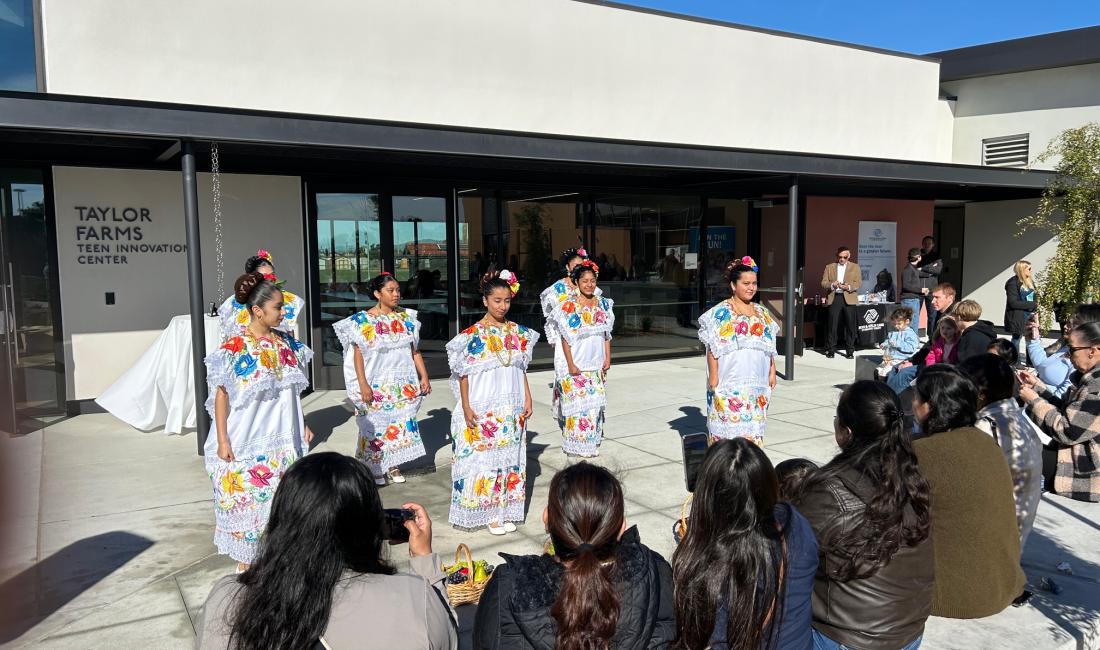
Joe Mathews’ recent California columns looked at why deliberative democracy needs to get into the ugliness of bureaucracy and lobbying (as it just did in Sacramento). He also returned to the small and wonderfully democratic Gonzales, California, where a powerful youth council of teenagers just opened a $28 million community center.
DEMOCRACY TYPE OF THE MONTH
“Synthetic Democracy”
At a major AI conference in India and in recent policy papers, this term was revived to describe the use of AI to “synthesize” public opinion as a method of democratic policy.
Instead of reading 10,000 comments in a digital community space, the city uses AI to synthesize those comments into democratic feedback—and proposals. The critics call this “democracy by data-mining.”
DEMOCRACY QUOTES
“”I know that all good people in the world believe in democracy and are brave… [Democracy] is a way of life, a light we protect in dark times.”
-Istanbul Acting Mayor Nuri Aslan, on Feb. 14, accepting the Pawel Adamowicz Award, named for the late Gdansk mayor, on behalf of imprisoned Istanbul Mayor Ekrem Imamoglu.
EVENTS
March 2-3. People. Power. Planet. Brussels
March 2-5, People Powered 2026 Convening. Nairobi, Kenya
May 17-22. World Urban Forum. Baku, Azerbaijan
June 4-7. US Conference of Mayors. Long Beach, California
June 23-26. United Cities and Local Governments World Congress. Tangier, Morocco
July 7-15, High Level Political Forum on Sustainable Development, United Nations, New York.
September 21-23, International Observatory of Participatory Democracy. Krakow, Poland
October 6-10, The 2026 Global Forum on Modern Direct Democracy. Gaborone, Botswana
October 12-13. UN Forum of Mayors. Geneva Switzerland.
SUGGESTED LINKS TO DEMOCRACY LOCAL RESOURCES AND PARTNERS
International Democracy Community
University College London Institute for Innovation and Public Purpose.
Federation for Innovation in Democracy-Europe and FIDE North America
United Cities and Local Governments
International Observatory of Participatory Democracy
ASU Participatory Governance Initiative
Taiwan Foundation for Democracy
National Civic League’s Center for Democracy Innovation
Journal of Deliberative Democracy
Local Government Information Unit
The Future of Where
Global Citizens’ Assembly Network (GloCAN),
newDemocracy Foundation (Australia)
National Coalition for Dialogue & Deliberation
University of Canberra (Australia)
Global Democracy Coalition newsletter
German Marshall Fund (Local Democracy)
Citizen Participation newsletter