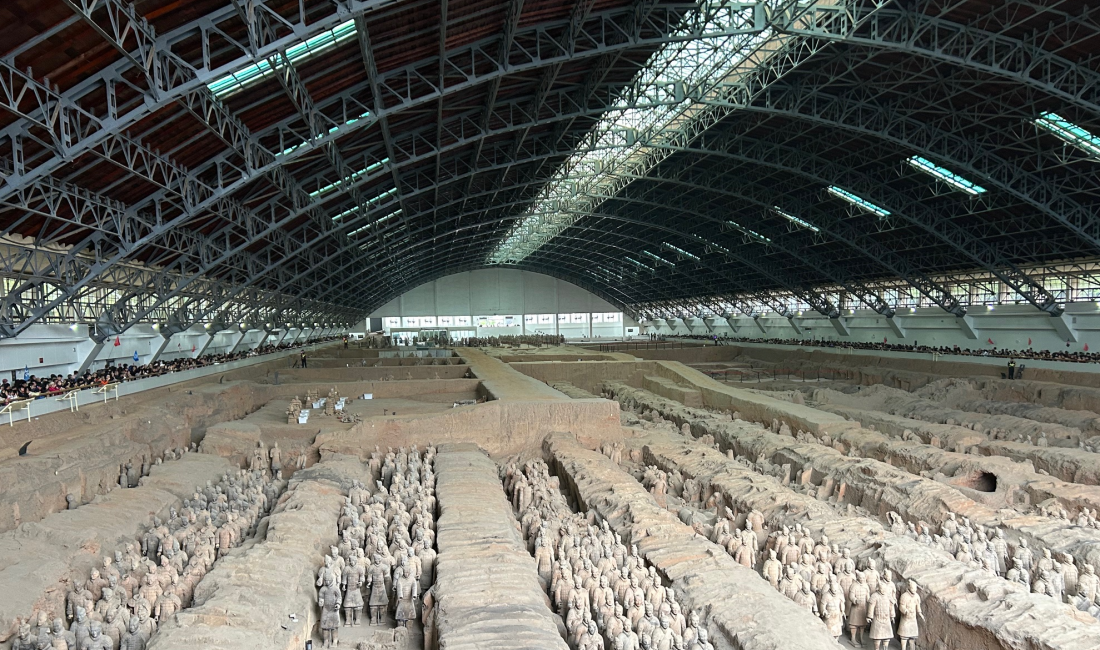
Also: Good Robot, Bad Robot, Slum Democracy Networks, and The Fearless City
Welcome to the monthly newsletter of Democracy Local, a planetary publication of stories, ideas, data, scholarship, and events about everyday people governing themselves.
More about us here. Donations to Democracy International and its democracy community, which hosts our publication, can be made here. Please feel free to sign up here or subscribe to our Substack. Learn more about International Democracy Community events here. (All photos by Joe Mathews)
DOES YOUR COMMUNITY NEED A PREAMBLE?
It’s important how you start—whether you’re starting a new year (happy 2026 to Democracy Local readers) or a local constitution.
So does your local constitution—or charter, or basic law, or organic law, or whatever you call it—have a preamble? And does it need one?
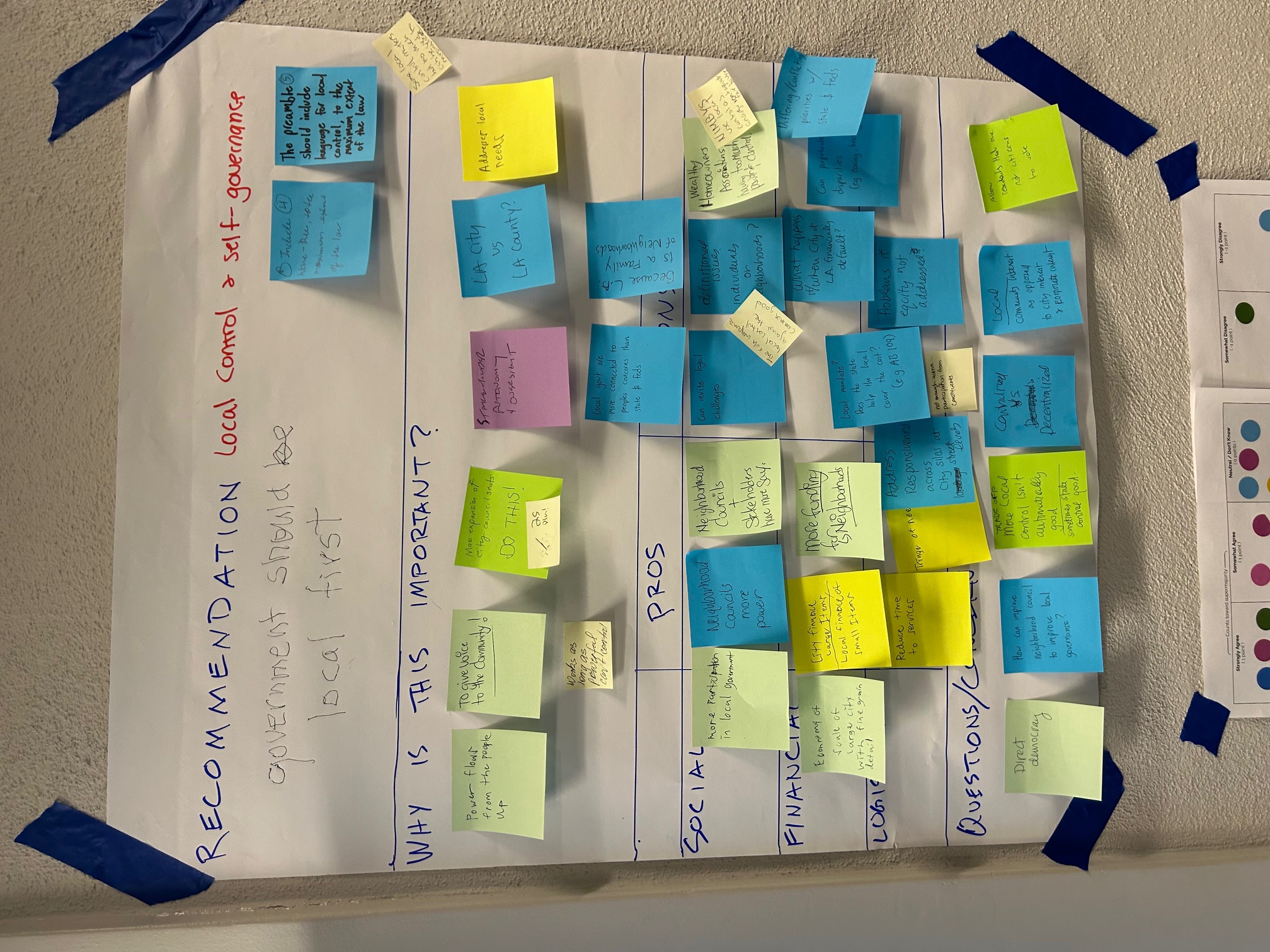
A preamble is an opening paragraph—or two or 10—that explains who—usually the people of the city—is drafting the constitution and for what shared goals or mission. As a volunteer co-lead of Rewrite LA, which is bringing a lottery-selected civic assembly of everyday Angelenos into the process of rewriting the city charter, Joe Mathews of Democracy Local had to research preambles.
This work started with the original city charter—William the Conqueror’s 1067 charter for the city of London, which begins by defining London as an international place that will protect your wealth. London is still that today. It also made me look at famous preambles, like the Charter of San Francisco, which is better known as the Charter of the United Nations, which begins:
We the people of the United Nations, determined to save succeeding generations from the scourge of war, which twice in our lifetime has brought untold sorrow to mankind, and to reaffirm faith in fundamental human rights, in the dignity and worth of the human person, in the equal rights of men and women and of nations large and small, and to establish conditions under which justice and respect for the obligations arising from treaties and other sources of international law can be maintained, and to promote social progress and better standards of life in larger freedom,
That was so good that the United Federation of Planets (from Star Trek) ripped it off.
We the lifeforms of the United Federation of Planets determined to save succeeding generations from the scourge of war, and to reaffirm faith in the fundamental rights of sentient beings...
The UN Charter popularized the preamble idea after the Second World War. Now preambles are standard in constitutions and charters, even of cities. Berlin’s 1995 preamble is typical:
Resolving to protect the freedom and the rights of every individual, to afford democratic order to the community and the economy, and to serve the spirit of social progress and peace, Berlin, the capital of the united Germany, has adopted the following Constitution:
In the 21st century, cities have used preambles—and the charters they top—to define themselves around various themes. There are ecological cities and feminist cities, and municipalities dedicated to mobility or creativity. But among the best governed cities in the world, the most common theme is democracy and human rights.
In 2012, Gwangju, South Korea, a city known for a democratic uprising in 1980 (and now as the home of K-Pop star J-Hope), drafted the first city “human rights charter” in Asia, and its preamble started with a history of anti-democratic violence to justify itself. Then it moved on to seizing on some urban themes.
Whereas recognition of the historical achievements of the Donghak Peasants' Uprising, the March 1st Independence Movement, the Gwangju Students' Independence Movement as well as the noble spirit of the April 19th Revolution, the May 18th Pro‐democracy Movement being the foundation of Gwangju as a human rights city in accordance with universal values such as human dignity, freedom, equality and solidarity;
Whereas the Gwangju Human Rights Charter is established, based on such a conviction, with a view to realizing the Universal Declaration of Human Rights and promoting democracy and justice; Whereas all citizens of Gwangju are entitled to enjoy all human rights as a member of a free and humane community, in areas of political, economic social, cultural and environmental nature, without distinction of any kind, such as race, gender, age, religion, disability, nationality, region of birth, economic and social status;
Whereas the people of Gwangju have pledged themselves to join efforts to enhance their potential capacity for creative cultures, pursue the lives for peaceful unification and ecological sustainability while respecting diversity of life experiences;
Whereas the Charter is an outcome of voluntary participation and open consultation among people of all walks of life, Now, therefore, The Mayor and the citizens' representatives, with united spirits and aspirations of all citizens, solemnly proclaims this Gwangju Human Rights Charter which defines citizens' rights and responsibilities as well as duties and will of Gwangju city as a commitment of Gwangju towards all generations of the past, present and the future of Gwangju as well as all peoples on the Korean peninsula, Asia and the world.
In Los Angeles, the appointed charter review commission has discussed having a preamble, but some local activists have dismissed it as a distraction, and claimed it’s unenforceable. To the contrary, charters and preambles often have enforcement provisions—Gwangju’s establishes measurements and bureaucracy to enforce, while Mexico City has a special institution and a system of reparations for charter violations.
But the skepticism about adding a charter preamble led Mathews to write his own. In so doing, he considered what theme might suit LA best, and landed on the notion of a “fearless city” popularized by Barcelona Mayor Ada Colau in the 2010s. LA is now ruled by fear—of Trump raids, of fires and emergencies, of rampant homelessness, of public official corruption.
So here is Democracy Local’s own proposed preamble for the city of Los Angeles (with a last line stolen from Star Trek). If you decide to write a preamble for your own city, please send it to joe@democracylocal.com
“The Fearless City”
Be not afraid. We, the People of Los Angeles, ordain this Charter to forge a Fearless City—a sanctuary where humanity, in all its brilliant colors, marches toward the horizon.
We pledge a peace where no neighbor fears the crime of the street nor the hand of the law. All of us, regardless of our origins, are full citizens in this municipality, and we refuse to be subjects of any outside power, foreign or domestic. In the City of Angels, we cast off the shadows, and we walk, work, and dream in the sweet sunlight of enduring courage.
Fear and want shall find no home here, as we commit to finding the bread, shelter, and shared strength to make every Angeleno whole. We will not cower at the advance of technology, but we do insist its benefits be shared. We do not run from nature, but rather, recognizing the interdependence of all life, resolve to live in harmony with our habitat.
We may sit far away, at the continent’s edge, but Los Angeles is no island. We stand ready to work with all cities and all peoples to protect human rights and solve world problems.
From the mountains to The Valley to our shining sea, we summon all our creative power to govern ourselves—and to write a future where Los Angeles is a beacon of hope for our planet.
Live long and prosper!
GOOD ROBOT, BAD ROBOT
When the World Council of the United Cities and Local Governments gets together, the talk is usually about municipal services, local climate change plans, or how to encourage local civic participation in an era of national authoritarianism.
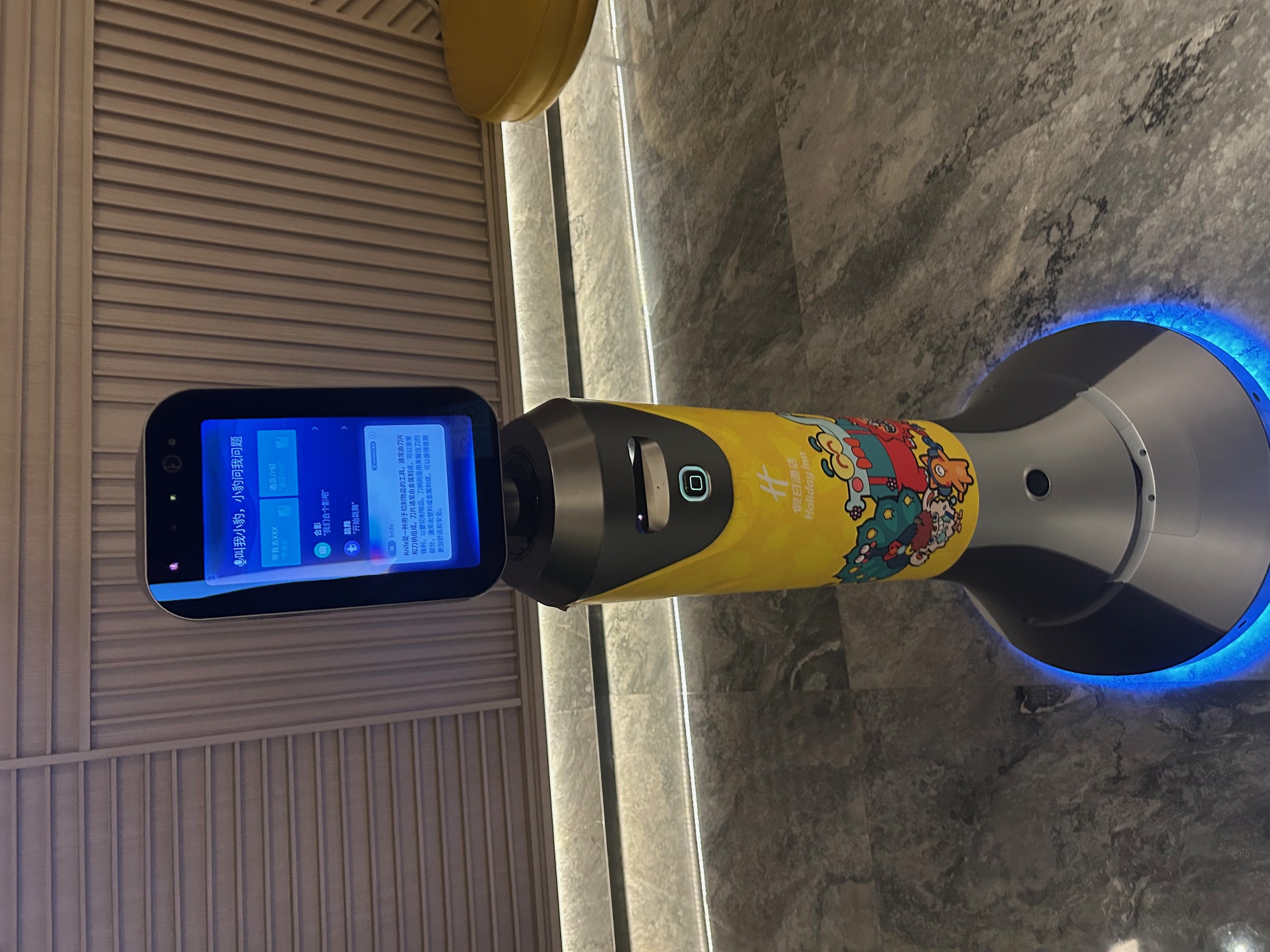
But at the most recent World Council in Xi’an, China, there was also considerable discussion of the two robots in the event hotel.
The more controversial of the two robots was called Shou Bot, who ran the lobby in a very loud and hectoring tone. Shou Bot directed people to the elevators and demanded your breakfast ticket on your way into the restaurant. Shou Bot brooked no dissent, rolled into guests, and got into a yelling match with the mayor of a district of a major African city.
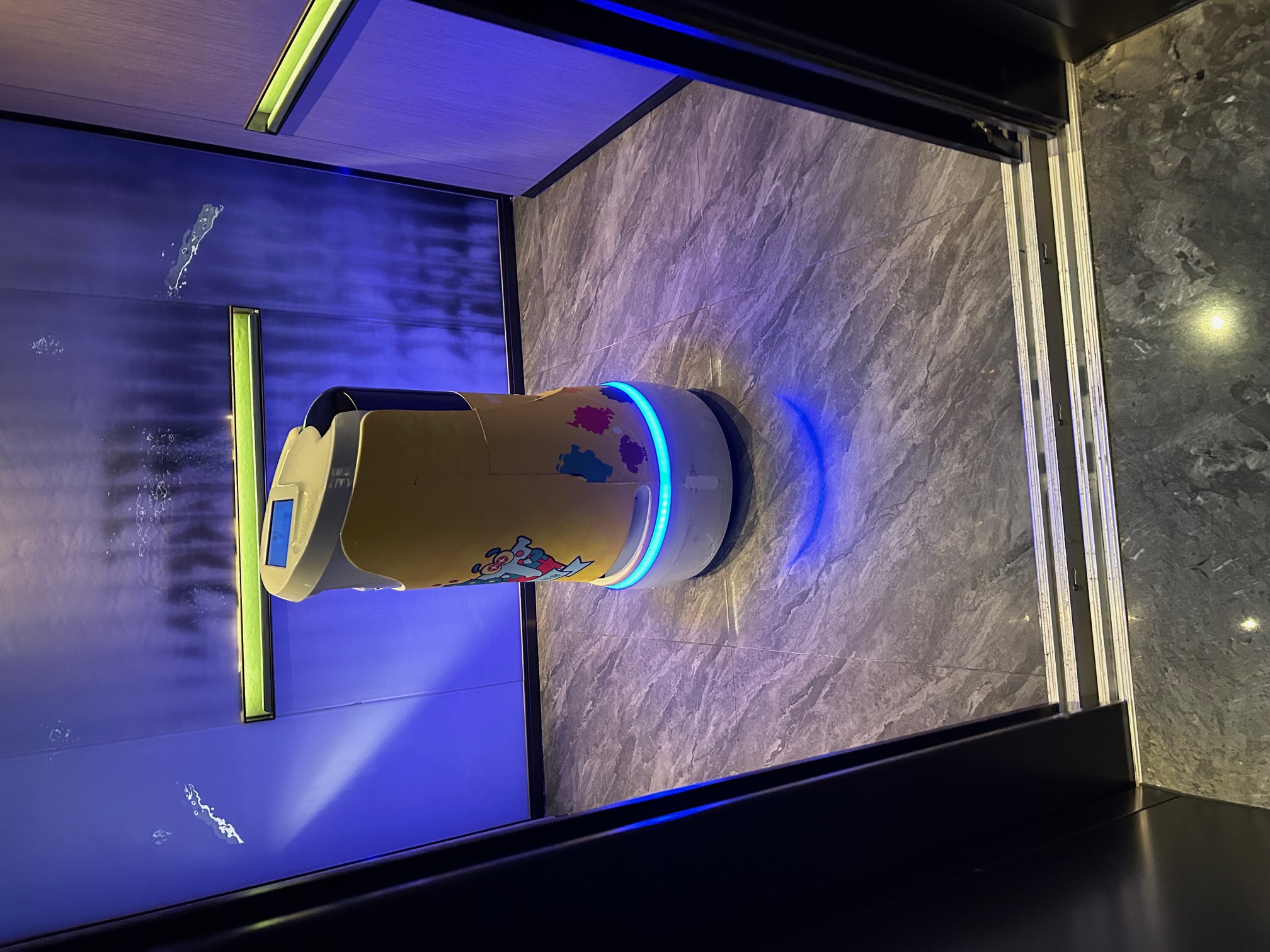
But the hotel had a second robot, Holly, who was a quiet worker, making deliveries to the room. Holly brought Democracy Local’s correspondent his laundry.
What’s the meaning of this good-robot, bad-robot routine?
Robots are becoming a bigger part of local governance, and Democracy Local encountered several in local government offices around China. But robots have different roles—they can be greeters or showpieces, or workers who deliver documents, or provide services.
And robots require management, as one UCLG official reminded me. And they can have different personalities, just like city staff.
TURKISH CITIES ON TOP
Don’t let national authoritarianism get you down. In Turkey, the cities of Ankara and Denizli have been named as two of the four finalists for a distinguished international prize, the European Capital of Democracy.
ASIA DEMOCRACY CHRONICLES
Among the local highlights from Asia’s leading site for democracy news and analysis:
A dispatch from the Manila suburb of Fairview, on the local costs of data centers.
As abductions rise of democracy activists in southeast Asia, it’s hard to count the absent.
In Hong Kong, a “Fire to Remember.”
EVENTS
February 3-5, World Governments Summit. Dubai.
Feb 11–Mar 4, 2026 (1–2:30 pm ET), The Better Public Meetings Training Series from the National Civic League & ICMA - International City/County Management Association. Save your seat: https://lnkd.in/d6YvmbAb
February 12-14, US Conference of Mayors Winter Leadership Meeting, Los Angeles.
March 2-5,. People Powered 2026 Convening. Nairobi, Kenya
March (tentative). Urban 20 Cities. Los Angeles and New York City
June 4-7. US Conference of Mayors. Long Beach, California
June 23-26. United Cities and Local Governments World Congress. Tangier, Morocco
September 21-23, International Observatory of Participatory Democracy. Krakow, Poland
October 6-10, The 2026 Global Forum on Modern Direct Democracy. Gaborone, Botswana
October 12-13. UN Forum of Mayors. Geneva Switzerland.
WHERE TO FIND DEMOCRACY FUNDING
This Medium piece on finding revenue to sustain democracy has some interesting ideas, but doesn’t cover big ones—like unleashing local governments so they can behave more like corporations (as you can see in Singapore, Dubai, or many Chinese cities).
READINGS:
What does it take for social movements to win control of city governments—and make big changes in people’s lives? Adria Bua’s study of 18 Spanish cities has answers.
In Interface Journal, Madeline Lord, a researcher based in Brescia, Italy, explains how two local radical democratic communities— Cherán, Mexico and Mexmûr, Kurdistan—“are transforming the statist domination of society” through “practices of women’s liberation, ecology and stateless democracy.”
A citizens assembly in the German state of Baden Wurttemberg came up with 44 recommendations in its final report (report is in German) for how to “make media fit for the future.” Intriguing ideas on transparency in stories and sourcing, as well as restrictions on children’s use of media. Here’s an account in English via Burgerrat.
At NOEMA, a new governing ecosystem is evolving, while more places are incorporating ecosystems into governance.
The Conversation describes how protesters in Sudan built networks of protection that now fight tyranny.
A look back at the impact of a deliberative process on youth homelessness in Deschutes County, Oregon, a year later:
In Osasco, Brazil, a new participation process has residents submit AI-generated photos of how they’d like to transform the city.
MEANWHILE IN CALIFORNIA
Democracy Local’s Joe Mathews columnized about a 50-year-old case allowing LA police to choke motorists now being by Trump to justify federal raids. Also: the death of an anti-tax crusader with a talent for building friendships on disagreement, and a letter to LA’s police chief, asking for advice on joining a gang (for all the right reasons!)
WATCHING:
“Goodbye Elections, Hello Democracy,” a documentary by Adam Cronkright, which looks at an assembly of 30 everyday Americans discussing COVID in Michigan.
Check out People Powered’s video on the citizens climate assembly in Plateau State, Nigeria.
The Future Local Lab’s Year in Review.
MORE AWARDS
Democracy Local named a mayor of the year (Balen Shah of Kathmandu) and three local governments of the year (San Luis Potosi, Mexico; Setagaya district, Tokyo, and Gothenburg, Sweden) for 2025.
If we had had more time for awards, we would have picked a “word of the year”—everythingism.
That’s the trend—described by Re:State—of governments pursuing every single policy as a vehicle for ever plan or objective at once. The rise of AI makes you think you can do everything. More—but not everything—on this subject later in the year.
CLIP N SAVE REFERENCE TOOLS
From Bloomberg and Harvard, a City Leader Guide to Civic Engagement.
Led by Metropolitan Group and Philanthropy for Active Civic Engagement (PACE), the Pro-Democracy Narrative Playbook Initiative is providing free, open-source resources to help communities communicate more effectively about democratic values and civic space: https://ow.ly/xSRp50XFK4F
Berggruen Institute’s Planetary Program, in partnership with Dark Matter Labs, has launched the Planetary Compendium — “an evolving wunderkammer of planetary governance.”
The United Nations Development Program offers recommendations for municipal work to advance the world’s Sustainble Development Goals.
LOCAL SNAPSHOTS
In our regular feature, we capture brief excerpts of interviews and talks with local officials and engaged residents from all over the world, including::
Mayor Luis Barcala of Alicante, Spain, on AI
Deputy Mayor Harkirat Singh of Brampton, Canada, on using tech to empower diverse communities.
A Sign Full of Service Delivery Promises outside the city hall in Gaborone, Botswana.
Mayor Seydina Issa Laye Samb of Yoff, Senegal on the launch of the first digital governance app.
DEMOCRACY TYPE OF THE MONTH: “Slum Democracy.” The craze for city networks now includes efforts to connect informal neighborhoods and “slums” within and between cities, so they can combine their power. Among the better-known examples are Medellín, Colombia, the city invested in cable cars and escalators to connect informal settlements to the city center. Also, Ahmedabad, India, has launched the Slum Networking Project, a collaboration “involving multi-stakeholder partnerships to revitalize slums,
provide basic services, and legalize land for informal residents.:
DEMOCRACY QUOTE OF THE MONTH
“The powerful have their power. But we have something too — the capacity to stop pretending, to name reality, to build our strength at home and to act together.” Prime Minister Mark Carney, Canada
SUGGESTED LINKS TO DEMOCRACY LOCAL RESOURCES AND PARTNERS
International Democracy Community
University College London Institute for Innovation and Public Purpose.
Federation for Innovation in Democracy-Europe and FIDE North America
United Cities and Local Governments
International Observatory of Participatory Democracy
ASU Participatory Governance Initiative
Taiwan Foundation for Democracy
National Civic League’s Center for Democracy Innovation
Journal of Deliberative Democracy
Local Government Information Unit
The Future of Where
Global Citizens’ Assembly Network (GloCAN),
newDemocracy Foundation (Australia)
National Coalition for Dialogue & Deliberation
University of Canberra (Australia)
Global Democracy Coalition newsletter
German Marshall Fund (Local Democracy)