An Appreciation of Joel Fox and Friends
This column is co-published with Zócalo Public Square. Image via Fox & Hounds Daily.
If political differences are destined to leave us divided and friendless, how do you explain the life of Joel Fox?
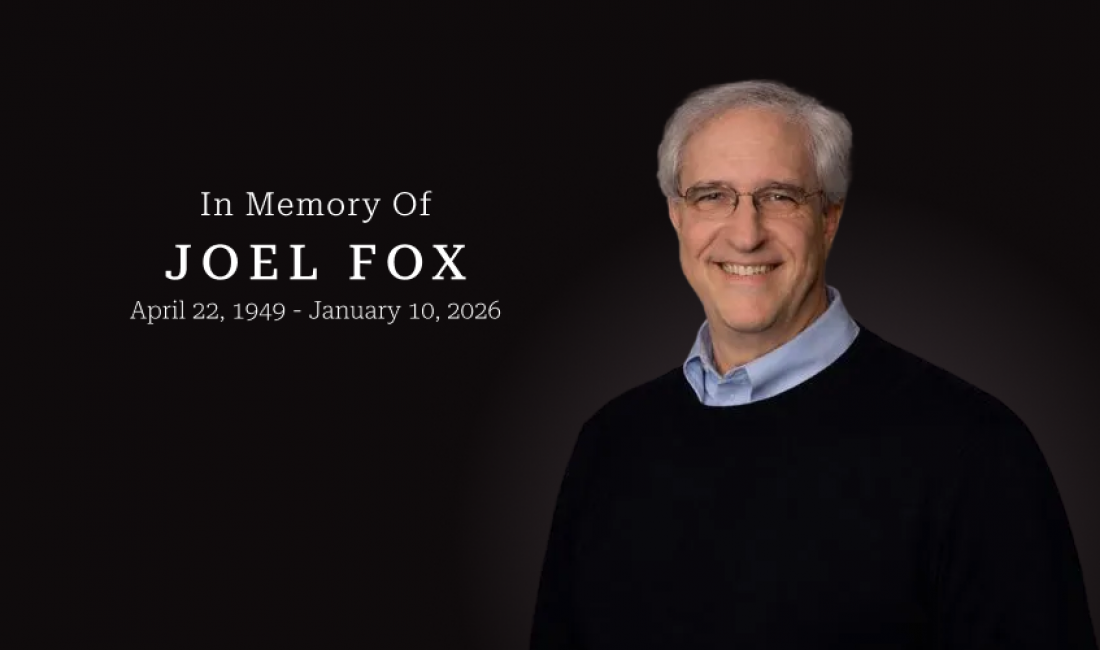
Fox died on January 10 after more than a decade of living with cancer. He was California’s most prominent taxpayer advocate since Howard Jarvis, for whom he worked, and whose anti-tax organization he led from 1986 to 1998. Fox, a Republican, advanced conservative ideas on TV and op-ed pages. He advised the campaigns of Gov. Arnold Schwarzenegger, Mayor Richard Riordan, and U.S. Sen. John McCain.
That profile, in our polarized times, might make you think Fox was one of those political ideologues who are driving the country apart. But the opposite is true.
Fox, more than any person in California politics, built deep relationships with people across the political spectrum. And he did not do this through consensus or compromise. Instead, Fox built friendships on disagreement itself—a warm, open, and curious style of disagreement.
“Everyone knew where Joel stood on things, but he was so open and friendly,” Rabbi Paul Kipnes said in his eulogy. “And he always listened.”
One example of Fox’s approach was the four-hour-long, weekly class on California public policy that he taught for 18 years at Pepperdine. I thought of it as “Joel Fox and Friends,” the polar opposite of cable TV’s “Fox and Friends.”
Whenever your columnist was a guest speaker, I would come early or stay late to watch the day’s other guest speakers engage in funny disagreement with Fox and his students. They were sometimes California Republicans but more often Democrats—Antonio Villaraigosa, Karen Bass, Bob Hertzberg, or John Pérez.
I once asked Fox whom he most admired in California civic life. After thinking for a minute, Fox—the state’s leading defender of Proposition 13, which limited public investment in California—named his good friend Connie Rice, a civil rights lawyer whose Advancement Project is devoted to investing in the state’s most disadvantaged people.
If he had asked the same question of me, I would have said Fox himself.
If not for Joel’s support, both as a source and a friend, I would not have this column. I got to know him while covering Schwarzenegger’s 2003 campaign for the Los Angeles Times. Most Arnold aides wouldn’t give me the time of day, but Fox would patiently explain to me both the thinking and the politics behind each campaign proposal.
Fox later became a major source for my first book, The People’s Machine, about how Schwarzenegger used the state’s system of direct democracy to get into state politics, run for office, and govern. I don’t think I could have written the book without Joel; he had total command of the late 20th century history of ballot measure politics, and his finger on the pulse of current developments.
Joel did not agree with many of my conclusions, including the main one. He thought of California’s direct democracy as a model that gave strong power to ordinary people. I saw, and still see, that same power as inflexible, thus preventing the future-oriented governance the 21st century requires.
But that didn’t stop Fox from connecting me to his vast network of thinkers, and doers. Fox is responsible for the most important relationship of my professional life. While sitting in Gov. Schwarzenegger’s office one day in 2006, Joel introduced me to a visiting Swiss-Swedish journalist named Bruno Kaufmann whom he was hosting. Bruno and I have been collaborators in democracy writing and convening ever since.
Then, in 2008, Joel asked me to contribute two short items a week to his new website on California politics and business, Fox & Hounds. I would remain his most frequent contributor for its 13 lively years.
Writing for Joel was a joy. He would entertain any idea, and invite anyone to write for him. Fox never rejected an item of mine, or edited out a thought with which he disagreed. The only time he suggested changes was I was being too harsh about a particular person.
“Your point here is a smart one. I think readers will focus on it more if you aren’t mean to Jerry,” he once emailed me. I took his advice and removed a swipe at Gov. Brown.
Fox’s view of politics was most precisely expressed by his decision to give an annual award to the Golden State figure who best embodied Black Bart, an 1880s stagecoach robber known for good manners, eschewing violence, and taking the side of the people.
While Fox wrote novels in his free time—three were published, [EB1] mysteries drawn from American history (with Lincoln and FDR as characters)—Black Bart left poems at the sites of his robberies. Joel’s favorite read:
I’ve labored long and hard for bread,
For honor, and for riches,
But on my corns too long you’ve tread,
You fine-haired sons of bitches.
Friendship with Joel was about more than work and political disagreement. We talked often about our shared passions—for baseball and the film The Man Who Shot Liberty Valance. He was great at keeping in touch, stopping to see me in Pasadena on his drives from his San Fernando Valley home to his cancer treatments at City of Hope in Duarte.
He was reliably funny and self-deprecating. A favorite story involved his attempts to get his grandchildren to call him “Granddude,” which their young mouths reduced to “Doo Doo,” a spectacular backfire that stuck.
Joel was one of those people who tried to say yes to everything, especially in service of the public. He served on two local government commissions and six California state commissions, including Schwarzenegger’s California Performance Review Commission, Pete Wilson’s California Constitution Revision Commission, and Assembly Speaker Villaraigosa’s commission on state and socal finance. He often ended up in the minority in these deliberations, opposing what the majority recommended while praising their good work.
Joel’s final published writing, an appreciation of Rob Reiner, was typical of him. Joel recalled an extended lunch with Reiner to discuss the filmmaker’s ballot initiative to reform education through tax increases.
“Even though we didn’t see eye to eye on many political matters, I admired his passion,” Joel wrote of Reiner. “We even found common ground in our attitude towards teachers’ unions. However, in the end I campaigned and helped defeat his initiative because of the tax increase.”
Joel’s spirit survives him. In addition to his wife, two sons and two grandchildren, Joel leaves behind a [SR2] novel, Two Sides of Death, to be published this spring. At Joel’s funeral, while mourners were still shoveling dirt over his casket, Tom Ross and Bryan Merica, who ran the business side of Fox & Hounds, told me that they had been plotting the site’s revival. They had a call scheduled the next week. I quickly agreed to take Joel’s place on it.