Out-of-Country Voting Tests Democracy in Local Communities
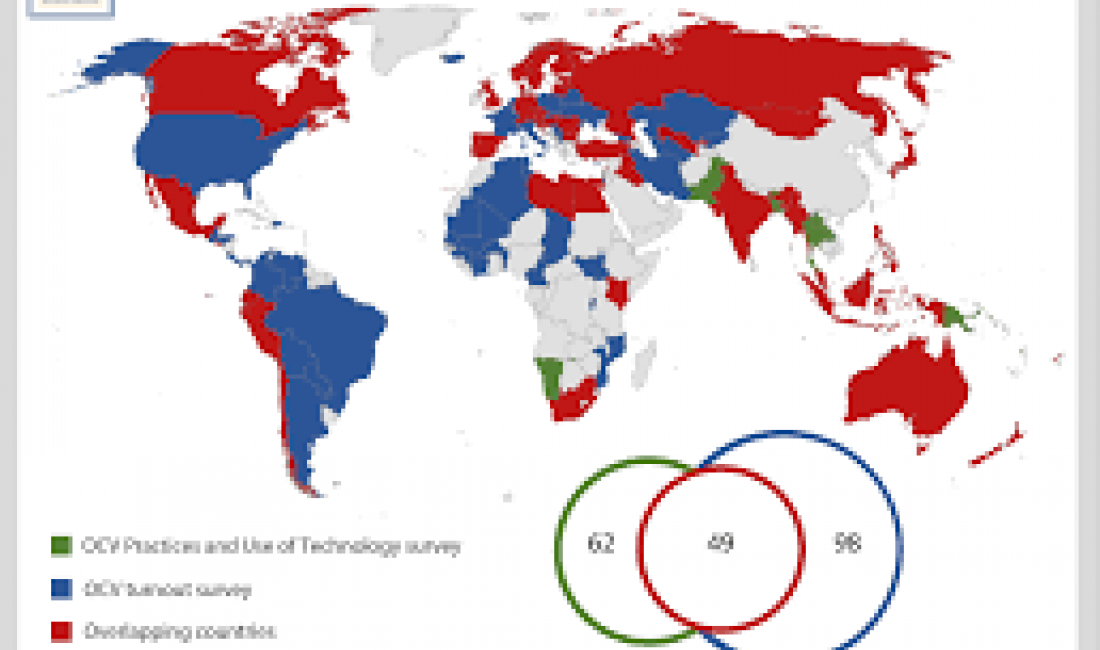
(Map from International IDEA)
Should citizenship be defined by geographic boundaries, or is it a lifelong civic bond?
The number of people living outside their countries of origin has risen from a modest 80 million people in 1970 to a staggering 304 million today. Most of these people choose to stay within their own continents,
When we talk about the health of global democracy, we tend to look at domestic polling queues, campaign rallies, and local legislative debates. We almost completely ignore the millions of citizens watching from afar. Out-of-Country Voting (OCV) is a quiet, complex, and deeply under-attended issue. Yet, the way a nation treats its overseas voters is perhaps the truest tell of its genuine commitment to democracy.
According to International IDEA, which featured OCV in its 2025 report on the global state of democracy, the resilience of democracy is linked to political inclusion. For hundreds of millions of migrants, OCV is the ultimate tool for that inclusion, reinforcing their sense of civic belonging and keeping them politically engaged with their homelands. When done right, it can ease their eventual reintegration if they choose to return home. When done wrong, or ignored entirely, it leaves a massive portion of the global population structurally disenfranchised.
To understand how this global experiment is playing out, we have to look closely at three very different nations that forced open the boundaries of the ballot box.
The story of Kosovo’s 2025 parliamentary election is a narrative of sudden, sweeping ambition meeting the gritty reality of cross-border logistics. Relative to its size, Kosovo possesses one of the largest diasporas on earth—a vibrant, fiercely loyal population whose economic remittances fuel roughly 15 percent of the country’s gross domestic product. They are, by all accounts, a financial and political powerhouse.
For years, voting from abroad was a logistical nightmare for Kosovo’s emigrants—costly, unreliable, and frustrating. But the 2023 Law on General Elections changed the rules of the game, granting expanded voting rights that were put to the test for the very first time in 2025.
The reform dismantled old bureaucratic hurdles, introducing a swift online registration process and easing documentation requirements. Suddenly, the diaspora had options: they could use traditional postal voting, drop their ballots into designated post office boxes set up across 22 different countries, or vote in person at Kosovo’s diplomatic missions.
The response was overwhelming. Diaspora voter turnout rocketed past 75 percent, marking a spectacular 20 percent increase over the previous record set in 2021. It was hailed by many as a milestone for democratic expansion and political equality.
But behind the scenes, democracy looked less like a smooth digital system and more like a high-stakes thriller.
When postal contracts for transporting the ballots collapsed due to sudden procurement and tender complaints, the Central Electoral Commission (CEC) and the Ministry of Foreign Affairs had to improvise. They loaded thousands of ballots into institutional vehicles, rushing them across international borders under the watchful eyes of police escorts and diplomats.
The chaos drew criticism. Opponents argued the reforms were dangerously premature, pointing to flawed civil records that resulted in bloated voter rolls susceptible to manipulation. The ruling party enjoyed immense diaspora backing, raising uncomfortable questions about whether the reform was a moral imperative or a self-interested strategic maneuver to tilt the scales.
Some argued that the diaspora should not vote at all
Yet, Kosovo’s electoral authorities viewed these hurdles not as structural failures, but as necessary growing pains. They realized that while organizing in-person voting at embassies was incredibly demanding, it offered far stronger safeguards against fraud than postal systems. The core lesson was simple: if we do not exclude voters at home for systemic imperfections, we shouldn’t draw an arbitrary line at our borders.
Thousands of miles away, the Philippines attempted a completely different democratic experiment ahead of its May 12, 2025, midterm elections. Historically, overseas Filipinos who wanted to exercise their civic duty had to endure grueling journeys to designated embassies or consulates, or trust their votes to the vagaries of international mail.
Seeking a solution, the Commission on Elections activated over 77 Online Voting and Counting System hubs worldwide. The technology was sleek, user-friendly, and designed to bring the ballot box directly to the smartphones and laptops of 1.2 million overseas citizens, with the hope of reversing historically dismal turnout rates.
On paper, the technology performed admirably; international observers noted that the online voting process ran without a hitch. Yet, when the digital dust settled, the data revealed a sobering truth: only 221,284 voters—a meager 18.1 percent of the eligible overseas population—chose to cast their ballots online. This was actually a slight decrease from the 18.5 percent turnout seen in the previous, entirely analog midterm election.
The disappointment highlighted a critical flaw in how modern democracies approach OCV: they often mistake technical access for genuine engagement. Dr. Imelda Deinla, a leading legal expert, noted that for migrants, the abstract act of voting must constantly compete with the exhausting realities of survival.
The Philippine experiment proved that building a secure voting app is only half the battle. If a state fails to connect democratic participation with the real-world values and immediate struggles of its transnational communities, the most advanced voting portal on earth will simply sit empty.
To find a system that successfully wrestles with both the logistics of inclusion and the philosophy of fairness, one must look to the mid-Atlantic ridge, where the small island nation of Cape Verde has spent decades navigating its own massive diaspora.
Faced with severe living conditions at home, Cape Verdeans have been emigrating since the 19th century. Today, the size of the diaspora is estimated at 500,000 people—meaning there are just as many Cape Verdeans living abroad as there are residing within the national territory. Despite leaving physically, these emigrants never truly severed their ties; their currency remittances remain a vital lifeblood for the domestic economy.
When Cape Verde transitioned to democracy in 1991, its leaders immediately recognized a profound constitutional dilemma. If they gave every overseas citizen an equal vote, the massive diaspora could completely overwhelm domestic choices, effectively electing a president against the explicit will of the residents living on the islands.
To protect their national independence while honoring their global citizens, lawmakers engineered a brilliant, highly sophisticated compromise:
To participate in legislative elections, citizens abroad must fulfill specific criteria, such as having emigrated within the last five years, supporting dependent relatives back home, or having visited the islands within the past three years.
In presidential elections, every citizen abroad gets a vote, but the total weight of the entire overseas electorate is legally capped at one-fifth (20%) of the total votes cast within the national territory. If the diaspora turnout exceeds that threshold, the votes are mathematically scaled down proportionately to preserve the domestic balance of power.
Rather than allowing overseas votes to dilute local constituencies, Cape Verde divided the globe into three distinct diaspora districts: Africa, the Americas, and Europe/Rest of the World. Together, these districts elect six dedicated representatives to the 72-seat National Assembly.
Cape Verde’s model relies on physical proximity rather than digital convenience. They ban postal voting entirely, requiring citizens to cast ballots in person at consulates, embassies, or mobile polling stations managed under strict rules. Yet, despite this thorough legal framework, Cape Verde faces the same stubborn ghost that haunts the Philippines: low voter engagement. In past elections, only a fraction of eligible citizens registered, and a mere 27 percent of those registered actually turned out to vote.
Whether the story is about frantic ballot escorts in Kosovo, quiet smartphone screens of the Philippines, or the mathematical constitutional balances of Cape Verde it’s clear that out-of-country is a pillar of modern, mobile democracies.