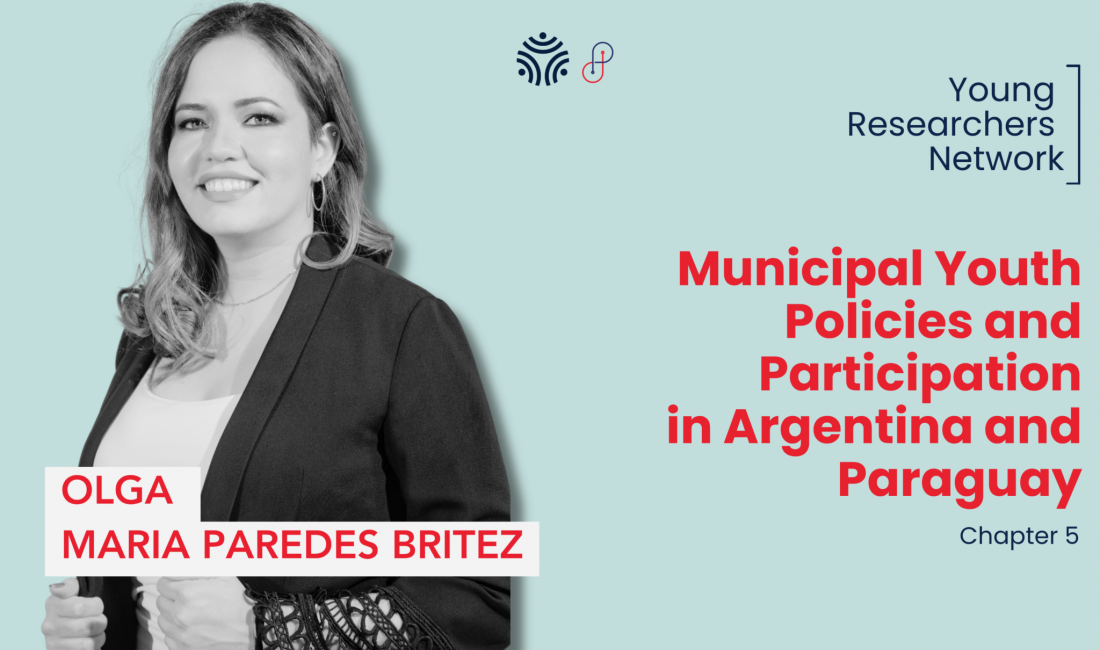
Looking at Local Youth Participation in Buenos Aires and Asunción
This is the begnning of Chapter 5 of a report on youth democracy from the Young Researchers Network.
Youth officially became a matter of public policy in Latin America in the 1980s, when specialised state agencies were created to institutionalize youth policies. In Argentina and Paraguay, the emergence of these policies coincided with the return of demoracy after military dictatorships, with young people playing a significant role in democratic transitions. This highlights the direct relationship between democracy, youth participation, and the development of youth policy.
The advent of democracy in Argentina and Paraguay occurred at the same time as decentralisation and municipalisation processes. Municipal governments have a strategic role in youth policies because of their territorial proximity and their capacity to create specific institutional arrangements for youth participation. In Paraguay, the first democratically elected municipal government after the dictatorship created the country’s first official youth policy unit, before any national institutionalisation. Despite the importance of specialised youth services in local governments, however, obstacles such as resource shortages and difficulties in ensuring effective and sustained youth participation remain.
The concept of youth constructed by a state is fundamental in defining the approach of its policies. This approach can take one of two forms. It can be transitional, focused on helping young people enter adulthood through employment and education. Or it can be affirmative, based on an understanding of youth as a social condition and aimed at promoting identity building and participation.
Given the tension between these two approaches, and in the context of the Covid-19 pandemic, this study seeks to answer the following question: How did the municipal governments of Buenos Aires (Argentina) and Asunción (Paraguay) – with their structural differences but common challenges – develop youth policies and promote youth participation in the period surrounding the pandemic?
Please read the rest of the chapter here.