The European Union acknowledges that democracy is under internal and external pressure, and also how declining trust and engagement are some of the key challenges it is facing today. But, what can we do about it?
Many types of democracy can coexist within a democratic environment that allow its existence and survival. Representative democracy (namely, elections) is only the tip of the iceberg. Building on our previous observations on the European Citizens’ Panels (see €1.8 Trillion Through the Eyes of 150 Europeans, and European Democracy Needs More Than a Shield), now we would like to introduce how the Citizens’ Panel on Democratic Resilience, and deliberative democracy in general, engage citizens as actors of democracy, and shine a light on the ways in which our Youth Programme contributes to creating similar spaces for young people.
Not only does this panel give the resources for European citizens to gain knowledge, reflect on their needs and worries, and make non-binding recommendations on how to tackle them, but, most importantly, it offers citizens the space to exchange ideas and share them with the rest of European society. The European Commission is making a clear stance: citizens’ voices matter and holding shared and open spaces for discussion and exchange of ideas is very important to build democratic resilience.
How do we contribute to creating similar spaces through our projects?
That’s one of the main aims of the Democracy Camp by Democracy International, and we do so by organising youth exchanges with the top priority of listening to young people’s voices. In practice it looks like this: we facilitate multicultural spaces to discuss opportunities and challenges that youth participation faces today and, consequently, young people are able to find a common ground and collectively draw conclusions and recommendations for improvement.
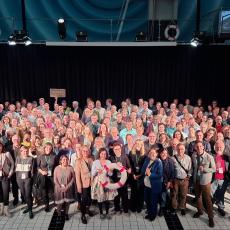
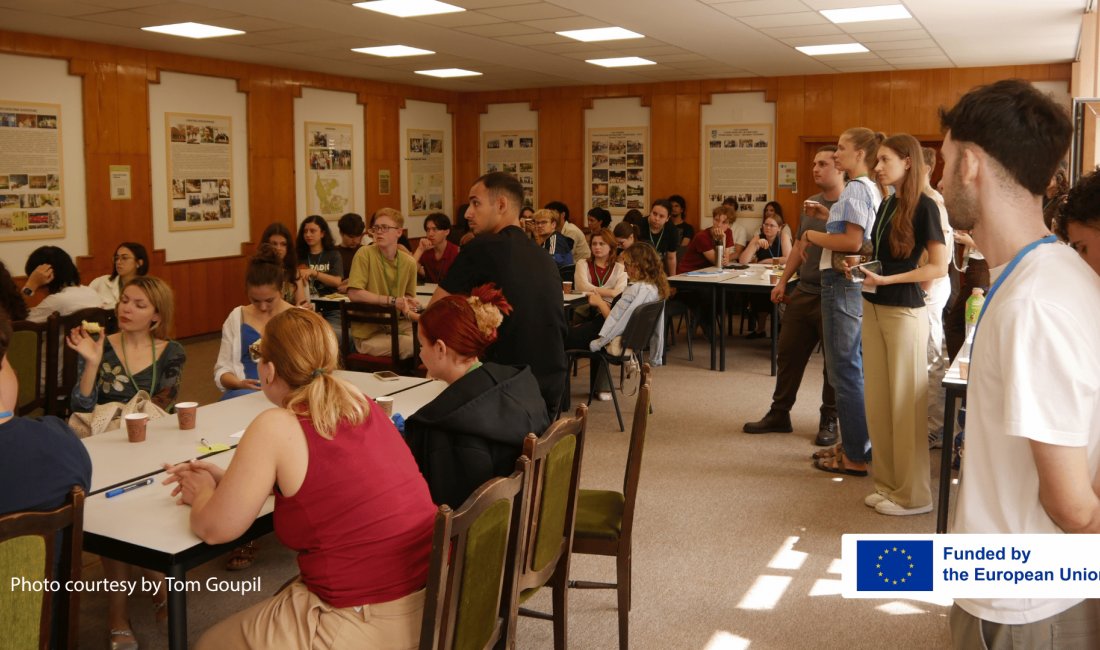
Less than a month ago, we were closing the sixth edition of the Democracy Camp, this time in Bulgaria. This youth exchange gathered around 70 young people between 16 and 26 years of age, in the cities of Sofia and Veliko Tarnovo, to learn about and exchange best practices to engage in direct democracy, media literacy, inclusion, and Europe. The Democracy Camp in Bulgaria focused on four main methodological actions: observe, listen, share, and reflect.
Step 1: Observe
A key step would be observing what has already been done, what exists and works currently, and, in the case of the exchange, what can we learn from our surroundings? In the Camp, participants had a chance to observe and reflect on the development of democracy in Bulgaria through many activities. On the one hand, they played a Democracy Scavenger Hunt between the most relevant buildings related to the democratic history of Bulgaria around the city of Sofia, and they even got a guided tour of the newest National Assembly building. On the other hand, during our time in Veliko Tarnovo, participants took part in a Historical Tour around the old town of the older capital of Bulgaria; they discovered spaces and stories connected to democracy and inclusion, and were able to reflect on the connection of these spaces with the history and values that shape our society today.
Step 2: Listen
The next step should naturally be to listen, because it is not only important what we see but also what we can learn from talking with people who are experienced in the topics that we want to address. For that, participants had a chance to meet, listen to and engage with local initiatives from Bulgaria. One of them was the Sofia Development Association, a non-profit organisation which acts as a resource centre for testing innovations in the field of culture and digital transformation, research, analysis and educational programs that create conditions for permanent dialogue between civil society, creative communities, business, academic institutions and the Sofia Municipality 1. Representing them in the Camp, Sevdalina Voynova, Director of Programmes, and Snezhina Gabova, Researcher, hosted a presentation and a discussion on civic activism for a resilient democracy.
Additionally, we had a panel discussion on inclusion and anti-discrimination practices in the region of Veliko Tarnovo, with two key stakeholders: the Amalipe Center for Interethnic Dialogue and Tolerance and the КилерЪ (the Closet) campaign. On the one hand, Teodora Krumova took part as a speaker representing the Amalipe Center, a leading Roma organisation working for the equal integration of the Roma community with a central role in organising its civic movement and implementing advocacy activities for Roma integration in front of state institutions and Bulgarian society 2. On the other hand, we also had the pleasure of having Margarita Simeonova, founder of Future World Association, creators of the Closet, an ecological and social campaign hosting the first and only permanent free market in Bulgaria, which aimed to decrease the amount of waste generated and at the same time support people facing socioeconomic difficulties.
The panel discussion not only enlightened participants on the many ways in which civil society can engage with individuals and collectives with fewer opportunities and vice versa, but it also held a space for reflection and discussion on the potential collaborations that could come from uniting forces between the two speakers’ organisations.
Step 3: Share
Once we had learned as much as possible from the outside, we needed to look inside our group, our lives, and our feelings. Some session during the Democracy Camp focused on allowing participants to share and exchange their own experiences and thoughts on citizen participation across Europe. One of them was the World Café, where the group leaders of each delegation hosted a table about youth participation tools in their country, and participants were able to learn and draw similarities and differences with their own countries’.
There was also an allocated time with parallel workshops hosted by the participants, who brought their own knowledge and skills on media literacy, discourse techniques, propaganda, solidarity, and intersectionality. We would like to highlight two very memorable sessions that took place. Anna Kichula, supported by the whole Ukrainian delegation, hosted a presentation on the role of civil society and volunteering in Ukraine, followed by a very engaging discussion on solidarity during wartime. Also, Dimitar Konduzov, from the Bulgarian delegation, facilitated and animated an interactive simulation on freedom of speech, censorship, literature, and critical thinking.
Step 4: Reflect
Last and certainly not least, only after following the previous steps can we make an informed reflection on the ways our experiences and needs overlap. The overlaps, and also the lack of them, show us a realistic image of how the constellation of challenges and successes in youth participation tools is currently. This allows us to draw conclusions and make evidence-based recommendations on how to improve and strengthen youth participation in democracy. Two key sessions which prompted participants to reflect and find a common ground were the Ideas Brunch and the Implementation of the Youth Participation Handbook, where the plenary was divided into working groups that addressed specific topics related to youth participation. The latter consolidated the learnings of the Democracy Camp and gathered the participants’ takeaways and recommendations for the creation of the Youth Participation Handbook 2026. The former tackled important considerations for the creation of a network of young people interested in democracy, namely the Youth Democracy Network.
Our reflection: Resilience starts by holding space for a conversation
The spaces before and after and in-between the four steps are filled with conversations. Having 70 young people in the same place at the same time doing the same activities brings them to have interesting conversations, because after all they are 70 individual people with different backgrounds in different countries with different cultures. There is a spark that happens when you put all these steps into action, and I like to call it “exchange”. And this exchange happens when you allow conversations to be held.
The European Union also makes it very clear that holding these spaces for discussion between different people from diverse backgrounds is a key step to strengthen democratic resilience 3. Considering the challenges democracy is facing today, giving an opportunity for citizens to share their lived experiences and actively listening to their suggestions is a small step for us, but a big step towards making the European Union more ours. We are very happy to see the Commission taking further steps in favour of deliberative democratic tools, like the European Citizens’ Panels, which also brings us to reflect on all the work we are also doing in our Youth Programme by holding a similar space for dialogue and exchange from young people across Europe.
At the end of the day, democracy is about bringing together different voices in society and finding common solutions 4, and, as President Ursula von der Leyen’s well-known speech in the International Charlemagne Prize 2025 ceremony goes: “Europe can only thrive if democracy thrives”.