San Luis Potosí, Mexico; Setagaya District, Tokyo; and Gothenburg, Sweden Share Inaugural Prize
As nation-states self-destruct and dump their problems and the planet’s problems on their peoples, local governments around the world are stepping up to new responsibilities in new ways.
Indeed, so many local governments are stepping up that it was hard for Democracy Local to choose just one entity for its first-ever Local Government of the Year prize.
Too hard, in fact. So, we chose three.
That’s still too few. But these three governments, in three very different places, rose to new heights. In the process, they gave us confidence that everyday people, governing themselves locally, can govern the world much better than nation-states or international institutions.
WINNER 1: City of San Luis Potosí, Mexico
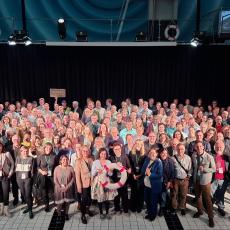
San Luis Potosí is the capital city of the “Free and Sovereign State” of the very same name. In 2025, the city of 800,000 took top global prize for “best practice” in local democracy at the 19th International Observatory on Participatory Democracy awards.
San Luis Potosí, in Mexico’s central plateau region, is home to seven “Pueblos Mágicos”—magic towns—but the real magic is in how thoroughly regular people govern the city.
At the heart of this community self-government is the “Building Citizenship” program. It consists of 284 citizen participation panels, representing people of every neighborhood in the city. The panels have a longer history; the recent advance is that they are now institutionalized in local government.
I have searched the world in vain for a more comprehensive local democratic initiative. Board members are chosen by their communities. And they have the power—both for their own communities, and for the city as a whole in collaboration—not only to identify needs or set priorities, but to decide policy and implement programs. Indeed, San Luis Potosí’s major programs in health, security, infrastructure and sustainability are run by these boards.
In practice, San Luis Potosí’s citizens are in constant conversation with skilled technocrats as they co-govern the city together. As Democracy Local has found in its reporting and research worldwide, the closeness and health of the relationship between regular people and empowered technocrats is the most important driver of effective, high-capacity, democratic governance.
Democracy Local, in naming San Luis Potosi as one of its three “Local Governments of the Year,” repeats the description that the International Observatory of Participatory Democracy offered in similarly awarding the city:
Building Citizenship “helped address historical issues such as citizen apathy, inequality in access to services, and the disconnection between the community and authorities. Tangible results were achieved, such as the provision of over 78,000 medical services through the Health Route, the rehabilitation of 390 public spaces during the ‘Domingos de Pilas’ events, and the execution of the Emergency Plan “Yes to Water,” which solved the water crisis through well drilling, equitable water distribution in cisterns, and the active participation of the CPBs to ensure social peace.
“Additionally, participatory democracy structures such as the Municipal Social Development Council were strengthened to approve strategic works and actions. The inclusion of vulnerable groups was a central pillar, with specific consultations for people with disabilities, indigenous peoples, and educational programs involving girls, boys, and youth.”
In history, the city is known for the Plan of San Luis Potosí, a document that ignited the Mexican Revolution. The city’s current plans hold the potential to ignite a planetary revolution in local governance.
WINNER 2: Setagaya District, Tokyo
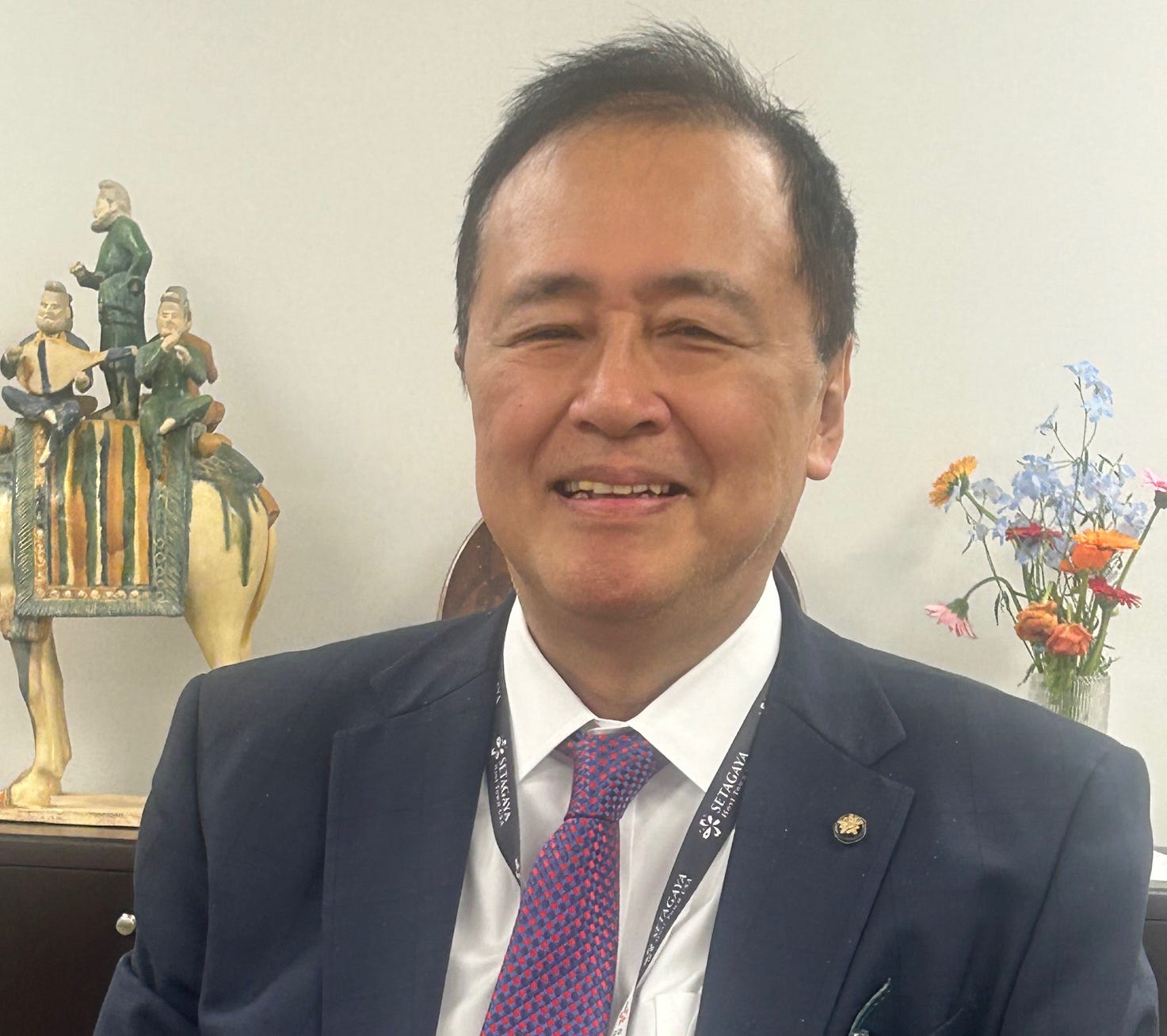
Joe Mathews of Democracy Local made two trips to Setagaya in 2025, but neither was enough to capture all the innovations being produced in this laboratory of democratic innovation
Setagaya is Tokyo prefecture’s most populous district, with 1 million people, southwest of central city. It’s a progressive place that has long led the country—Setagaya issued the first “Same-Sex Partnership” certificates in Japan a decade ago. And it’s long been led by Mayor Nobuto Hosaka, a tireless former journalist and former progressive legislator known nationwide for his advocacy for civil liberties.
Mayor Hosaka, the author of 31 books, is running too many experiments in his urban district to cover here. But two merit special interest.
One is the Setagaya Green Infrastructure School. This may be the world’s most effective blending of technocrats and regular people. At the school, technocrats lead the classes and programs, but residents do the work, which involves battling the “urban heat island” effect that makes Setagaya summers nearly unbearable and the growing climate risks that have worsened flooding in the Tanasawa and Maruko River basins.
Residents don’t just build a drainage system or plant trees. The school trains the residents as “Green Technicians” so they can plan and maintain permeable rain gardens and urban forests. The community creates the strategies itself, rather than handing off the duties to engineers. As Mayor Hosaka told Democracy Local, last February, this is:
“co-management, not consultation.”
Second, it’s worth mentioning a new project, launched in July, called “Expanding Children’s Futures.” The goal is to engage children in responses to the crisis of loneliness and declining birth rates. So far, it has produced a plan to integrate self-management and empathy into an elementary school curriculum.
In 2025, Setagaya also continued its clean energy work, transforming bus stops and municipal offices to 100 percent renewable energy via a solar farm. Two city departments—the Setagaya Bureau of Digital Services and the Policy Management Department—are also globally noteworthy for their real-time updated dashboards that allow people to challenge the government’s performance.
It’s a bit surprising that Setagaya has bus stops. Because democracy never seems to stop there.
Winner 3: Gothenburg, Sweden.
It’s impossible to top the account of Gothenburg’s world-leading investment in local governance that was offered by Bruno Kaufmann in his recent Democracy Local report. So, we won’t.
Here is Bruno’s November report again:
I was just back in Gothenburg, Sweden’s second biggest city. I know it well. I did my graduate research there. I lived there for five years. My children were born there.
And now, a very powerful and unusual approach to local democracy is being born.
For a long time, Gothenburg was about its harbour and industry, governed by the social democrats. Then, early in this century, it changed into a more service-oriented city, a modern city of universities. And they tried to make it more democratic by creating neighbourhood councils—20 different local parliaments.
But that didn’t work. The neighborhood councils didn’t have enough funds. People got angry about having all these local politicians who couldn’t deliver.
The spark of change came 15 years ago, when the city wanted to introduce congestion charges—higher tolls for traffic coming into the city at busy times. Congestion charges had already been instituted in Stockholm, but the Swedish capital had had an extended pilot program to introduce the change gradually.
In Gothenburg, however, people objected to congestion charges and wanted to hold a referendum. But the Social Democratic party was running the game, and they killed the citizens’ vote on congestion pricing. (In September 2014, almost 57% voted No)
This created a crisis of trust and then a push for democracy. Many new parties were formed and entered the government. Today, there are 7 parties in the local parliament.
In 2019, city leaders decided to make a big change. They would delete all the local councils.
The pandemic created more momentum and attention on what was going on in the city. There was a push for the digitisation of services. This was a big change. Ten years ago, you couldn’t even follow the local parliament online.
As they eliminated the local councils, Gothenburg also introduced a democracy requirement, a paragraph in the local charter.
It said that all administrators in the city, all the staff, have to be educated in civic dialogue and democracy.
And to do that training, they created an office for democracy—with a staff of more than 200 people.
Now it must be said that the city of Gothenburg is the biggest employer in all of Sweden, with 66,000 employees. Stockholm is twice as big in population, but has fewer staff because many services are privatised. In Gothenburg, all the services—health care, water, social services—are publicly owned.
Still, this democracy unit is remarkable. In all my travels around the world, I’ve never seen a local democracy office or agency with so many people.
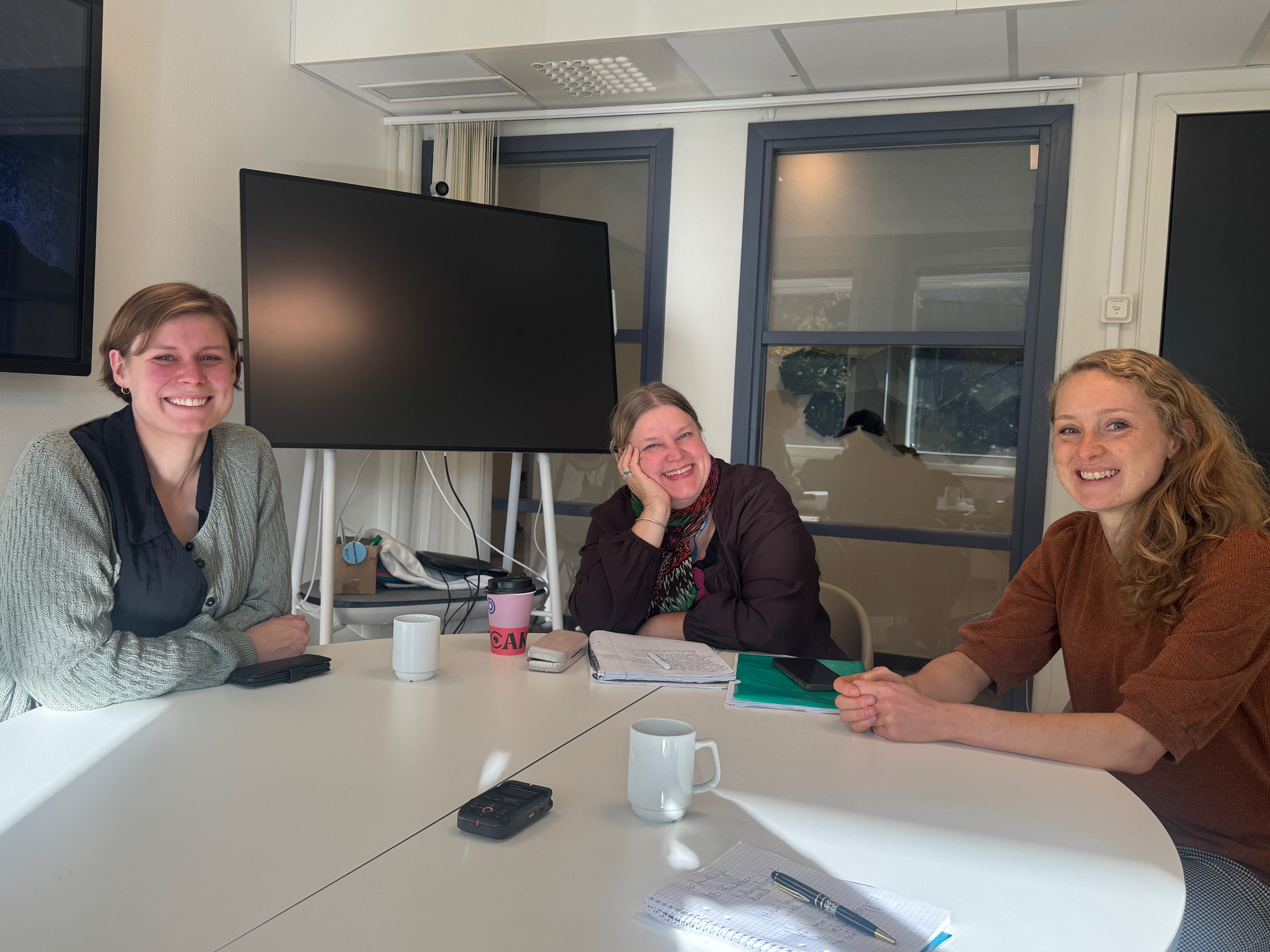
I went back to Gothenburg to see how this unit was doing, as part of research I’m doing for a book for the Swedish Association of Local Authorities and Regions.
I was a little bit shocked to see the size of the unit in person. You can say that, in a way, it’s very bureaucratic. The people who are in the democracy unit are all the same people in the same offices as before. But there’s a lot of intentional, cultural change work still in the making.
I learned that this democracy unit is not so outwardly focused. They are focused inward on the administration to educate the administration in democracy. They have introduced the principle that all units of the city need to be able to do their work in a deliberative way. This principle is still new—it only started in 2022.
They have built up this unit, this structure, and the city says it’s much more democratic than before, when they had this decentralised model. Because all the units of the local government are gaining the knowledge and competency to do democracy.
A sea change is now arriving here on the Swedish west coast. The guy who leads the democracy unit told me:
“Before, we just played around. Now the serious stuff begins.”
He thinks that now the expectations of the people of Gothenburg will grow and grow when they understand that they are in charge. Now, citizens are beginning to use and test the citizens' budgets, citizens' proposals, and digital tools that Gothenburg’s investment in democracy has created.
This has also turned politics upside down. The issue of trust in Gothenburg is very atypical. Today, the most trust in the city and the government is among the young people, those under 30, and the people in the poor areas around the city. Those are the people who are most happy with how the city operates. The most established people still mistrust the city.
And there are pushbacks and the chance of reversal. Right now, the city is governed by a centre-left coalition, but the right-wingers want to take away some of the democratic support for the people.
They think the party should do that alone.
Gothenburg has developed rather quickly from an old-style, paternalistic government into a much more diverse, participatory place. It’s also a model.
The leader of the Gothenburg democracy unit told me he had a meeting recently with a group in Brussels, and they couldn’t believe everything was happening. I recently invited Gothenburg to become a candidate to be the European Capital of Democracy.